CLOUDX SYSTEMS BLOG
What Is Omni-Channel?
The consumer product and retail landscape continues to evolve as companies race to catch up with leading e-tailers. Traditional brick-and-mortar retailers such as Macy's, Nordstrom, and Walmart are expanding their online offerings and introducing new models, including in-store fulfillment of online orders. Online players such as Amazon and Zalando are opening their own brick-and-mortar stores. Vertically integrated players such as Bose, Burberry, and Nike1 are strongly pushing their direct-to-consumer business through both online and new physical stores. And players of all kinds are complementing their physical stores and e-commerce offerings with innovative applications and social media to mount a truly omnichannel presence.
With all the difficulties and uncertainties that the COVID-19 pandemic has brought for retailers and consumer product companies, the crisis has also accelerated a preexisting trend toward omnichannel. Online sales have increased significantly across many product categories, and many consumers have tried out new shopping behaviors since the onset of the pandemic. For example, more than one-third of AmericanOmnichannel --- also spelled omnichannel --- is an approach to sales, marketing, and customer support that seeks to provide customers with a seamless and unified brand experience, regardless of which channel they use. The organization's distribution, promotion, and communication channels are well-integrated in the back end, so regardless of whether the customer is shopping online from a desktop or mobile device, by telephone, or in a brick-and-mortar store, their experience will be seamless and consistent.
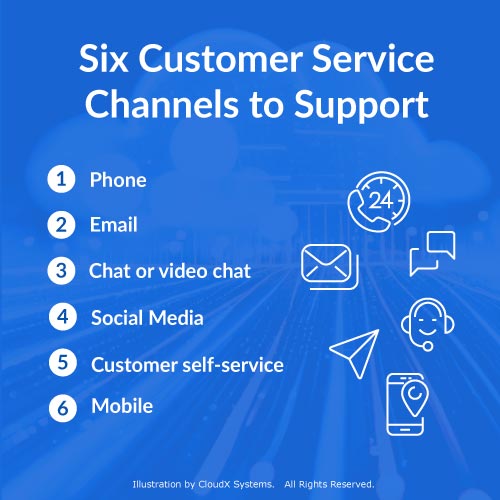
The omnichannel approach aims to provide a consistent customer experience across all digital and brick-and-mortar sales and marketing channels.
The terms omnichannel and multichannel are frequently used interchangeably. However, this is incorrect since there are some differences between the two approaches.
The term omnichannel is most frequently used in retail and e-commerce settings. A brand that focuses on omnichannel is able to provide consistent buying experiences across all the channels it operates on, including online, in-store, mobile, SMS, and social media.
Omnichannel example
Most customers have a preferred channel when interacting with and purchasing from a brand. Many use more than one channel along their customer journey. For example, Customer A may research a product online, purchase it in-store, and sign up for email marketing to receive product updates or new offers.
Regardless of which channel Customer A prefers or uses, an omnichannel approach ensures that their purchase experience is always consistent and frictionless. This may mean providing them with the same products and pricing across all channels so they always know what to expect from that brand. Or it may mean that the customer support team has key data about Customer A, which they use to communicate with them. The data also allows the team to seamlessly switch between channels so the conversation can continue per the customer's preference and with minimal interruptions during the changeover.s have made omnichannel behaviors---such as buying online for in-store pickup---part of their regular shopping routine, and nearly two-thirds of those individuals plan to continue these behaviors. While some proportion of the online sales boost may be temporary in some categories, online sales will continue to grow in others. Even as shops start to reopen, omnichannel will remain the norm for some product categories. This new normal has already had significant benefits for those who were prepared and could quickly ramp up their online volumes.
However, many players still struggle with omnichannel given its supply chain requirements, particularly in terms of speed, complexity, and efficiency. Consumers expect to be able to receive their products anytime and anywhere---and with a minimal lag between order and delivery, as well as with a high level of convenience. Traditional supply chain networks are often not built for same-day delivery with excellent service. This is an issue in this era of fierce competition; Amazon continually redefines delivery standards, for example.
Companies that can rise to these challenges, however, are already reaping significant benefits: our research shows that consumer experience leaders are more resilient during recessionary periods, experiencing shallower troughs and quicker recoveries.
In this article, we focus on the network and ecosystem of the future, and describe the principles that can guide companies' approaches to omnichannel network design in an increasingly complex environment.
- What is Direct to Consumer Fulfillment (DTC)? Features Explained
- Best Fulfillment Software Features for Optimal Order Efficiency
- Inventory Control vs Inventory Management: What’s the Difference?
- Automated Picking Systems for Faster Order Fulfillment
- How to Improve Fulfillment Speed Without Sacrificing Accuracy
- How to Reduce Picking & Packing Errors in Your Warehouse
- The Benefits of Warehouse Management for Customer Experience
- How to Improve the Order Fulfillment Process & Reduce Errors
- 10 Techniques to Improve Inventory Accuracy in Warehouse
- 7 Warning Signs it’s Time to Replace Your WMS - CloudX Systems
- How to Choose the Right Warehouse Management System Software for Your Business
- 7 Common Inventory Mistakes Ecommerce Brands Make (And How to Fix Them)
- WMS Implementation in 60–90 Days: The Fast ROI Playbook for Modern DTC Brands
- How Apparel & Lifestyle Brands Scale Beyond 3PLs With Order Fulfillment Software
- Best Warehouse Management System for Fashion Brands: Why Operators Switch
- Modern vs. Legacy WMS: What Mid-Market Brands Should Know
- 5 Common Fulfillment Errors and How Logistics Software to Reduce Picking and Packing Errors Fixes Them
- 3 Fast Wins You Get Immediately After Launching a Cloud-Based WMS
- Why an API-first WMS Makes Integrations the Hidden ROI Driver in Modern Fulfillment
- Scaling Fulfillment from One Warehouse to Worldwide With Inventory Software for Multi-Warehouse Operations
- WMS for Fashion & Lifestyle: The Hidden Engine Behind Fast Fulfillment
- How Predictable WMS Pricing Helps You Scale Without Overhead: A Practical Guide to Modern WMS Pricing Models
- From Months to Days: How a Cloud-Based WMS Helps DTC Brands Onboard New 3PLs Before Peak Season
- Peak Season Doesn't Have to Mean Crisis: How Real-Time Inventory Visibility Protects Margins
- CloudX Systems to Exhibit at NRF 2026: Retail's Big Show in New York City
- How to Scale Your Logistics Operations Globally with Cloud-Native WMS
- Returns Management: Why Your WMS Could Be the Key to Customer Loyalty
- The Role of APIs and Microservices in Modern WMS Platforms
- From Inbound to Final Mile: How WMS Drives End-to-End Supply Chain Efficiency
- Unlock Supply Chain Agility with Modern SaaS Architecture
- CloudX Systems to Exhibit as Gold Sponsor at Element Logic’s Automation Innovation 2025
- What Is a Warehouse Management System (WMS)? A Complete Guide for Modern Supply Chains
- CloudX Systems Appoints Kevin Johnston as Chief Technology Officer
- 5 Signs Your Business Is Ready for a WMS Upgrade
- The Reality of Customer Fulfillment
- When Bad Systems Happen to Good Retailers
- Omni-Channel Fulfillment and Why It’s Important
- Key Principles of Designing The Omni-Channel Distribution